ServicesTeeth Whitening
Teeth Whitening in Hopedale
Not every dark tooth is a stain. We look at what is causing the color first, whether coffee, age, an old filling or a tooth that needs care, then whiten the teeth that will respond. You get a brighter smile and no wasted treatment.
Whitening works best when we know the cause
Most yellowing comes from surface stains and from enamel thinning with age, which lets the darker layer underneath show through. Whitening gel handles both of those well. Some discoloration is different. A single gray tooth can mean the nerve inside has been injured. Brown spots can be early decay. Crowns, veneers and tooth-colored fillings do not change color with whitening at all.
That is why every whitening patient starts with a look at the teeth, not a tray of gel. If something needs attention first, we tell you plainly and explain the options. If your teeth are healthy, we pick the approach that fits your stain type and how sensitive your teeth tend to be, and we give you a realistic idea of the shade you can expect.
What your whitening treatment includes
A check of each discolored tooth
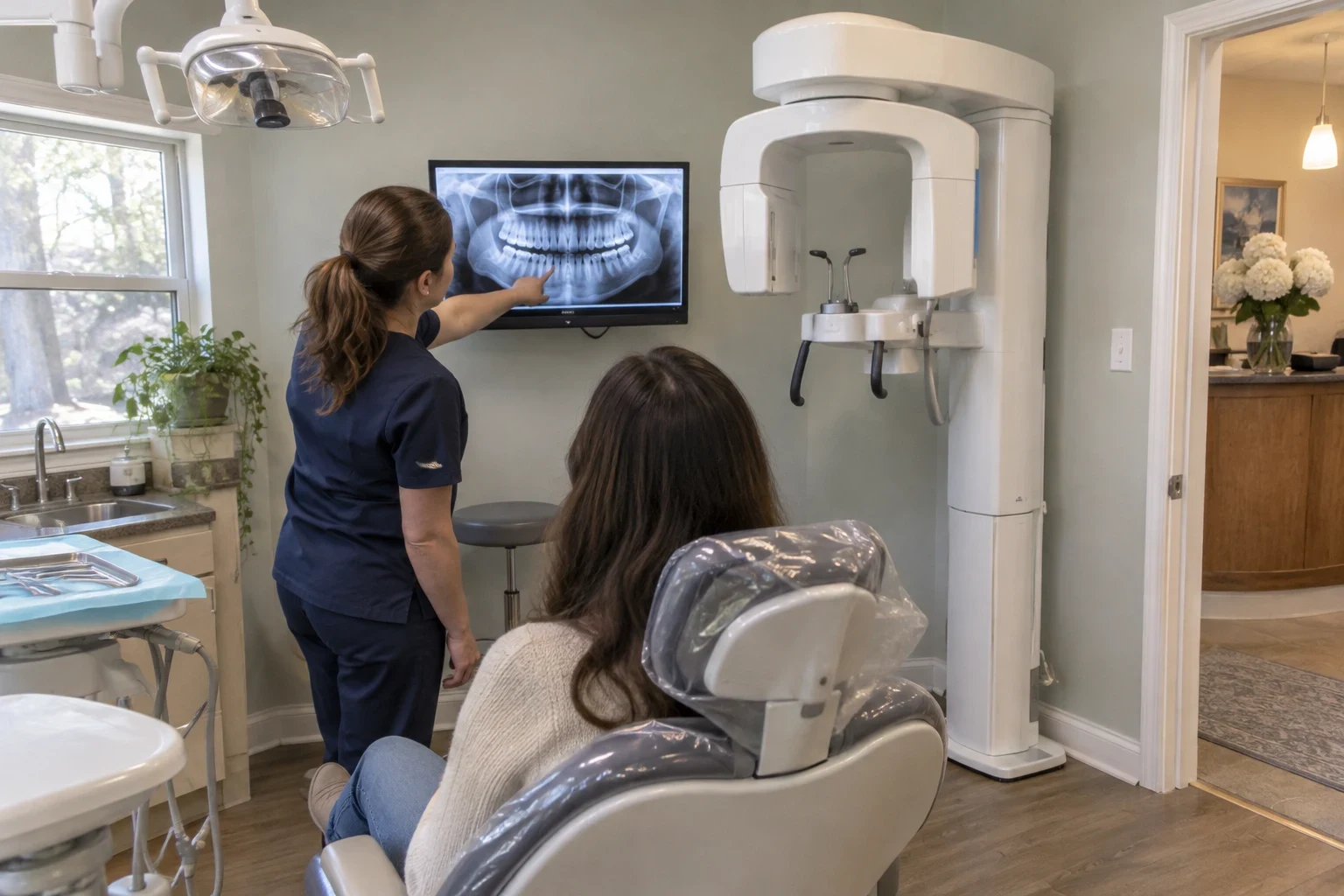
We look at the color pattern and, when needed, take an X-ray of a tooth that looks darker than its neighbors. This tells us whether the stain is on the surface or coming from inside.
A note on existing dental work
We point out any crowns, bridges or fillings on teeth that show when you smile. Since they will not lighten, we talk through whether matching them afterward makes sense for you.
A cleaning before whitening if needed
Plaque and tartar block the gel and leave uneven results. If you are due, we suggest a visit for exams and cleanings first so the whitening reaches clean enamel.
A whitening plan that suits you
Depending on your teeth, we may recommend in-office whitening, custom take-home trays, or both. We explain the difference in time, strength and comfort so you can choose.
Steps to keep sensitivity down
We protect your gums during treatment and can adjust the strength or schedule if your teeth are prone to sensitivity.
Aftercare advice
You leave knowing which foods and drinks to go easy on for the first couple of days and how to keep the new shade longer.
Signs whitening could help, and signs to check first
An even yellow tone
Teeth that have gradually turned yellow across the whole smile usually respond well. This is the most common reason patients ask us about whitening.
Coffee, tea or wine stains
Surface stains from dark drinks build up over years. Whitening lifts them, and a good cleaning often helps before you even start.
One tooth darker than the rest
A single gray or brown tooth is worth checking before any whitening. It can point to an old injury or a problem inside the tooth, and the right fix may be different.
Front fillings that no longer match
If your natural teeth are whiter than an old filling, or you plan to whiten, it helps to know that fillings keep their color. We can plan the order so everything matches at the end.
Sensitivity already present
If cold or sweet things already make your teeth ache, tell us. Exposed roots or a cavity should be looked at first so whitening stays comfortable.
How a whitening visit goes
- 1
Talk and examine
We ask what bothers you about your smile and look at each tooth. If anything needs treatment first, we explain it and what it means for your timeline.
- 2
Record your starting shade
We note your current shade with a shade guide so you can see the change for yourself afterward.
- 3
Whitening treatment
In the office, we shield your gums and lips first, then the gel goes on in timed rounds while you sit back and relax. If you choose take-home trays, we take impressions of your teeth so the trays fit snugly and hold the gel against the enamel, not your gums.
- 4
Check the result
We compare your new shade to the starting one and go over aftercare. If a tooth did not lighten as expected, we talk about why and what could help.
What affects the cost of whitening
Before any treatment begins, we walk you through your whitening options and what each one costs. Whitening is often listed as cosmetic under dental insurance, so we look into your plan's coverage and share the answer before you decide. If you have no insurance, our Office Dental Plan may help, and you can use the CareCredit Patient Payment Plan to pay over time.
- In-office or take-home
- In-office whitening uses a stronger gel in one visit. Custom trays take longer at home but cost differently, and some patients use both.
- Type of stain
- Deep or stubborn stains may need more sessions or a longer tray schedule than light surface yellowing.
- Treatment needed first
- A cleaning, a filling or care for a darkened tooth adds to the overall plan, though it is often covered differently than whitening.
- Matching existing work
- If a crown or filling stands out after whitening, replacing it to match is a separate cost we discuss with you ahead of time.
Teeth whitening questions
Something not covered here? (508) 652-5368
Will whitening make my teeth sensitive?
Some patients feel mild sensitivity for a day or two, and it usually fades on its own. We check for exposed roots or decay first, since those make sensitivity worse. If your teeth tend to be sensitive, we can use a gentler strength or space out sessions.
Will my crowns and fillings whiten too?
No. Crowns, bridges, veneers and tooth-colored fillings keep their original color. We point these out before you start so you are not surprised, and if one shows when you smile, we can talk about updating it to match your new shade.
How long do whitening results last?
It depends mostly on habits. Coffee, tea, red wine and smoking bring stains back sooner. Many patients do occasional touch-ups with take-home trays, and regular cleanings help keep the shade longer.
Is whitening okay for a teenager?
Usually we hold off until all the adult teeth have come in, and we talk with parents before anything starts. A teen's teeth have bigger nerve chambers, so they can react more strongly to whitening gel. We examine your teen's smile and tell you honestly whether now is a good time.
Why is one of my teeth darker than the others?
A single dark tooth often has a cause inside the tooth, such as a past bump or a problem with the nerve. Regular whitening may not change it much. We examine it, take an X-ray if needed, and explain the options that will actually work.
Find out what your smile needs
Patients come to us from Hopedale, Milford, Franklin and nearby towns. We start by finding the cause of the color, then plan whitening that fits your teeth.