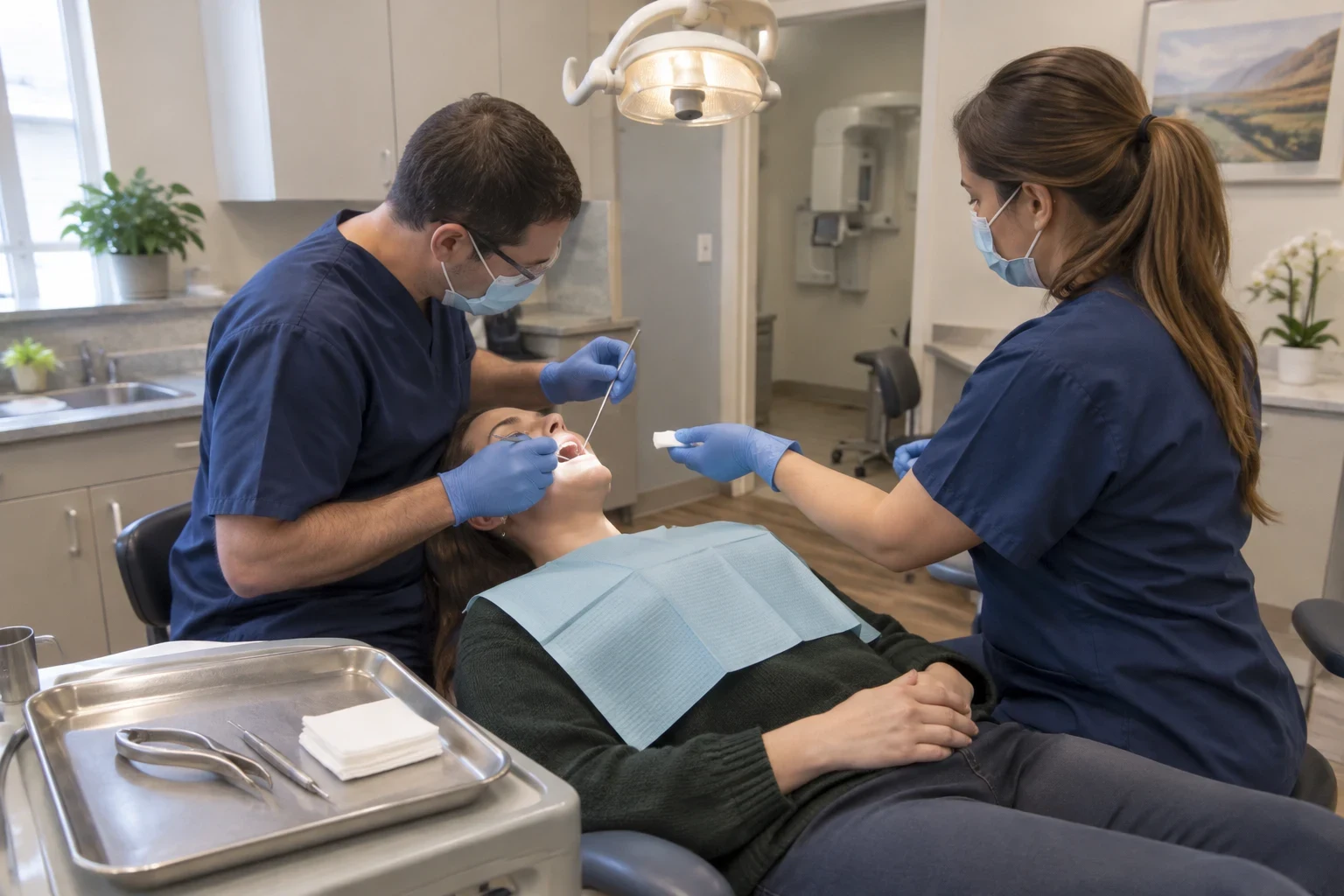
ServicesExtractions
Tooth Extractions in Hopedale
A painful or broken tooth deserves a clear answer before anything comes out. We test the tooth and take X-rays first, then tell you honestly whether it can be saved. If it has to go, we numb thoroughly and work gently.
When pulling a tooth is the right call
A sore or chipped tooth doesn't automatically need to come out. Before we suggest removal, we review X-rays, look at the gum tissue around the tooth and check how it reacts to biting pressure and cold. We want the real source of the trouble, so you keep any tooth that a filling or crown could still rescue.
Removal is usually the better choice when the tooth has fractured down past the gum, when a cavity has eaten too far into the tooth to rebuild it, when an infection keeps returning, or when a baby tooth won't make room for the adult tooth underneath. A crowded wisdom tooth that traps food and keeps the gum swollen is another case where taking it out brings real relief.
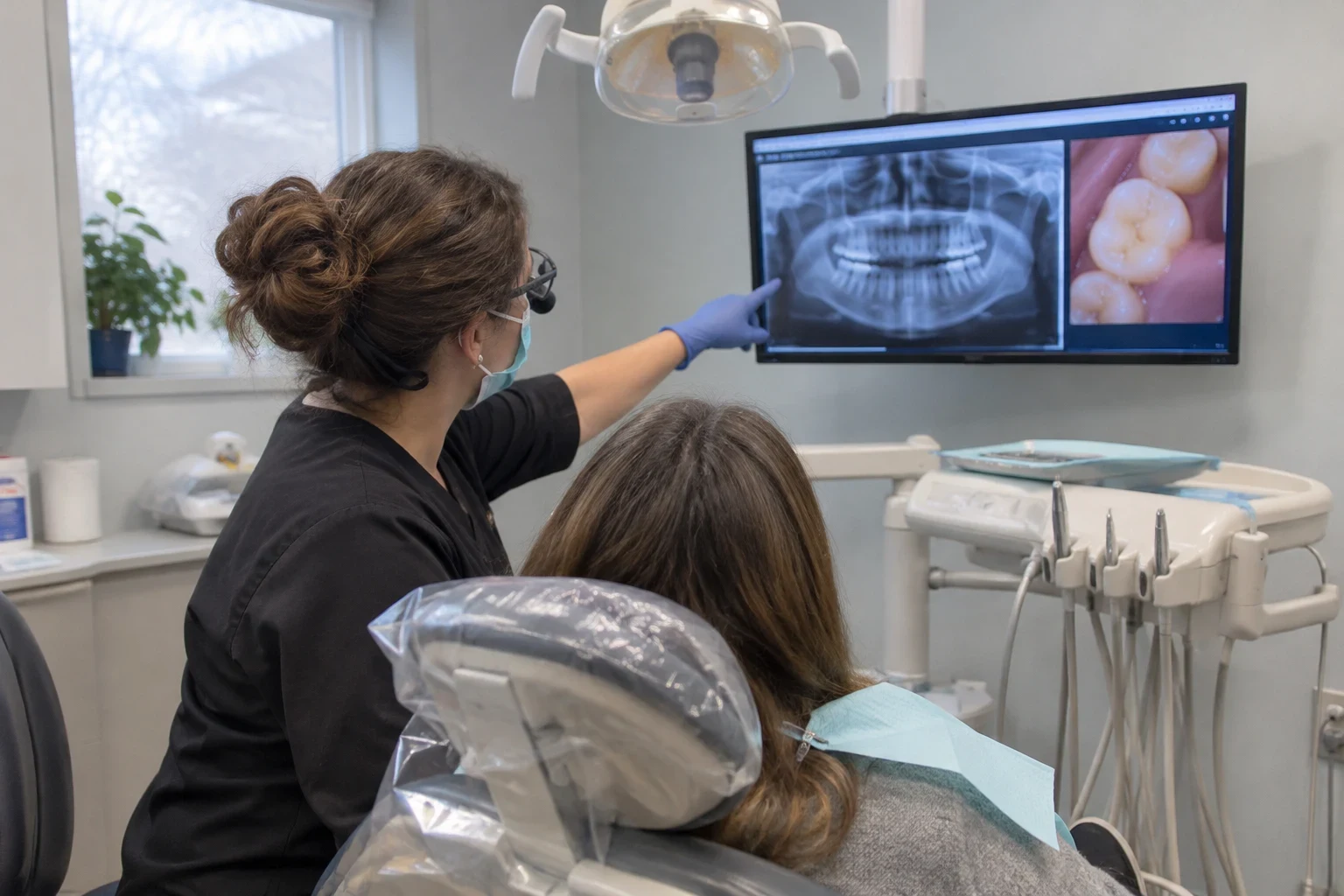
Many patients from Hopedale and nearby towns visit us after being told a tooth must go, simply wanting another opinion. We'll put the X-ray in front of you and explain exactly what we see.
What your extraction visit includes
- 01
X-rays and a root check
We study the roots and the bone holding them. Long or curved roots change how a tooth needs to come out, and we want to know that before we begin.
- 02
Numbing we confirm first
After the local anesthetic, we wait and check that the area is completely numb. Pressure is normal during removal, sharp pain is not. Let us know and we pause right away.
- 03
Sectioning when it's gentler
A badly broken tooth, or one with roots that spread apart, can come out more easily in smaller pieces. If we expect that, we'll tell you beforehand.
- 04
Baby teeth for kids
Sometimes a baby tooth hangs on and keeps the adult tooth from coming in straight. We go slowly and explain each step in words a child understands. Our Kids' Dentistry page has more on how we care for younger patients.
- 05
Healing instructions to take with you
Before you leave, we hand you extra gauze and an easy-to-read care sheet, and we describe what a normal recovery feels like day by day.
- 06
A plan for the gap
If the space will affect chewing or let nearby teeth shift, we'll go over replacement choices such as a bridge. The timing, and the decision, are yours.
Questions about Extractions?
Call(508) 652-5368When a tooth might need to come out
An ache that lingers or keeps you up
Pain that disturbs your sleep, or lasts well after a sip of coffee or ice water, may mean the nerve inside is badly damaged. Removal isn't the only answer for that, but the tooth should be looked at soon.
A fracture below the gumline
If a piece of tooth snaps off and the crack runs under the gum, too little healthy tooth may be left to hold a crown.
Swelling or a gum bump by one tooth
Puffy gum tissue, or a small pimple-like bump that sometimes drains, usually points to an infection near the root.
An adult tooth that wiggles
Permanent teeth should stay firm. If one moves, the bone around its root may have worn away, and we'll measure how much support is left.
A wisdom tooth only halfway through
When a wisdom tooth breaks through only partway, a flap of gum traps food and bacteria, so the soreness tends to return again and again.
Adult teeth coming in behind baby teeth
When a permanent tooth erupts behind a baby tooth that refuses to fall out, taking out the baby tooth often gives the new one room to move forward.
How an extraction appointment goes
- 1
Exam and X-rays
We ask where it hurts and how long it has been bothering you, then take X-rays and test the tooth. This step tells us whether removal is truly needed.
- 2
Go over your choices
We share what we found, whether saving the tooth is possible, and what each option costs before any work starts. Ask as many questions as you like.
- 3
Numbing and removal
When you're fully numb, we gently loosen the tooth and lift it free. For a simple extraction, the hands-on part often takes just a few minutes.
- 4
Clot care before you go
Firm pressure on a gauze pad helps the socket start healing. We'll cover the first day or so with you: stay away from straws and smoking, choose soft foods and wait until the next day to rinse gently.
- 5
A follow-up check
If something doesn't feel right as you heal, call the office and we'll set a time to look at the area.
What shapes the price of an extraction
We base the price on what the exam and X-ray show, and we go over the number with you before treatment starts. Most dental insurance plans are accepted here. If you have no insurance, our Office Dental Plan is an option, and the CareCredit Patient Payment Plan lets you pay over time if that works better for your budget.
- One piece or several
- A tooth that lifts out whole is quicker work. A tooth that has broken down, or one with curved or spread roots, may need to be divided and removed in sections, which takes longer.
- Number of teeth
- Taking out two or more teeth at one visit raises the total, but it can spare you a second appointment and a second round of numbing.
- Current X-rays
- If we don't have recent images of the area, new X-rays are part of the visit so we can see the full length of the roots.
- What your plan covers
- Coverage for extractions varies from plan to plan. We'll go over your benefits with you so you have a realistic idea of your share.
- Filling the gap later
- A bridge or other replacement is priced on its own. You can decide on it now, later or not at all.
Extraction questions we hear most
Does having a tooth pulled hurt?
With the area fully numb, patients usually notice pushing and pressure rather than sharp pain. The spot tends to stay tender for a couple of days, and store-bought pain medicine is generally enough to keep you comfortable. We'll recommend what to take and explain which symptoms are a reason to call us.
Could my tooth still be saved?
In many cases, yes. That's why we test the tooth and read the X-ray before we recommend anything. If a filling or crown can keep it working, we'll tell you so. If it can't, we'll show you the reason on the image.
How long does healing take?
Most patients feel much better after a few days, and new tissue keeps filling the socket over the following several weeks. Avoid straws and smoking at first, because the suction can dislodge the blood clot and leave a painful, exposed socket called dry socket.
Do I need to replace the tooth?
That depends on which tooth it is. A wisdom tooth far in the back rarely leaves a gap that needs filling. A tooth farther forward can let the teeth beside it tip and drift, so we'll go over a bridge or other options when that applies to you.
Can my child have a tooth taken out here?
Yes. We remove baby teeth that are badly decayed or blocking an adult tooth, and we keep the pace slow so kids stay calm. A parent is welcome to stay close by.
Do you take out wisdom teeth?
We remove many wisdom teeth, especially ones that have already broken through the gum. If the X-ray shows a tooth buried deep in the bone or sitting near a nerve, we'll tell you plainly and help you find the right specialist.
Find out if that tooth really needs to come out
We'll take a careful look, show you what we find and give you a straight answer. If removal is the right choice, we'll make it as gentle as we can.