ServicesCrowns & Bridges
Crowns & Bridges in Hopedale
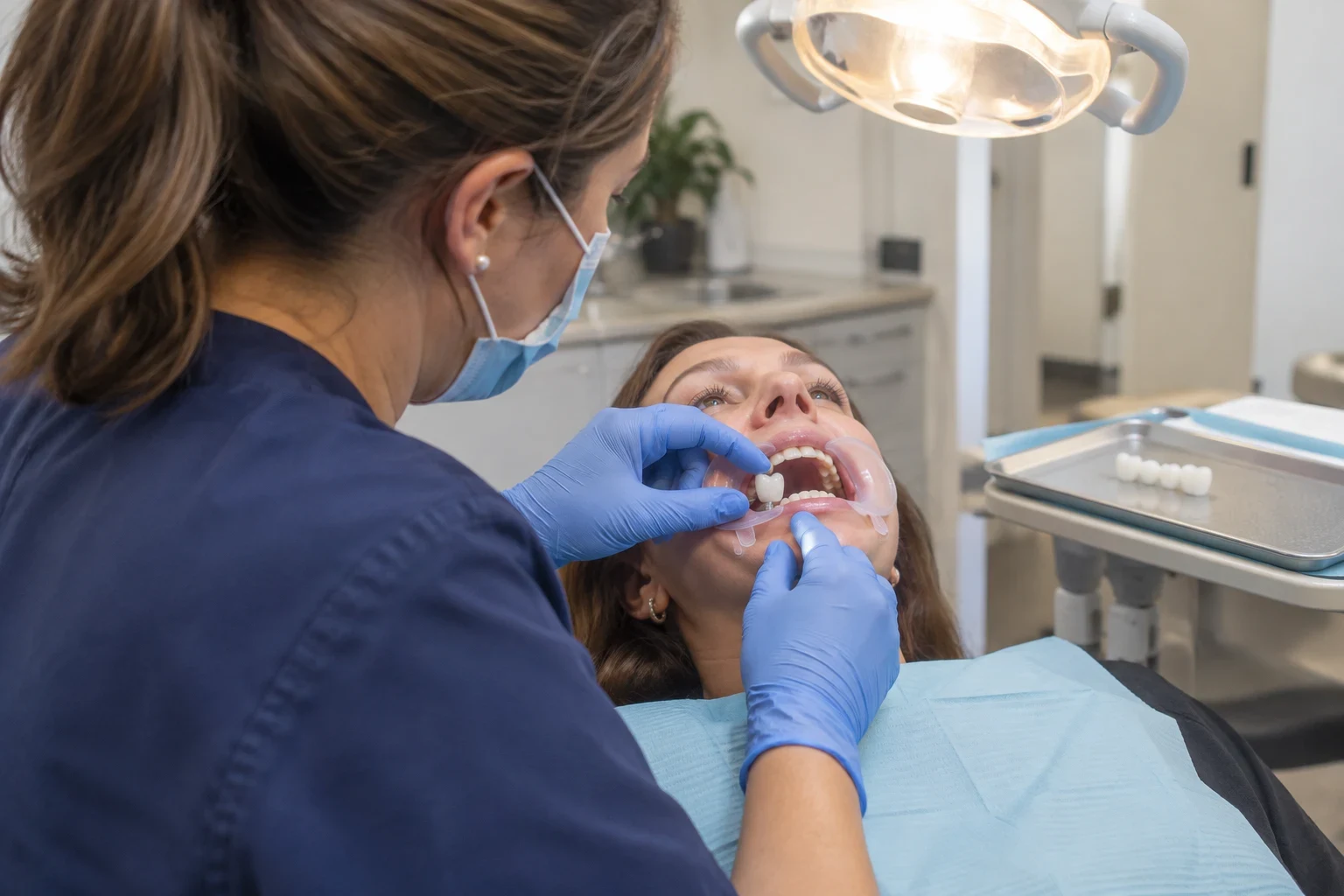
A crown protects a tooth that has cracked, worn down or lost too much structure to a large filling. A bridge fills the space a missing tooth left behind. We start by finding out why the tooth failed, so your new crown or bridge fits your bite.
When a crown or bridge is the right fix
Not every broken or sore tooth needs a crown. A small chip may only need a filling. A tooth that hurts when you bite can have a crack, a failing old filling or a problem in the gum around it. Each of those calls for a different fix. Before we recommend anything, we look at the tooth closely, take X-rays, check how your teeth meet and test for cracks. Then we explain what we found in plain words.
When a crown is the answer, it covers the whole visible part of the tooth and holds it together, much like a cap. A bridge uses crowns on the teeth on either side of a gap to anchor a replacement tooth in between. Both are made to match the shape and shade of your natural teeth, so your smile looks like your own.
What comes with crown and bridge treatment
A careful look before any work
X-rays, a bite check and a close search for cracks, decay hiding under old fillings and gum trouble come first. If the tooth can't support a crown, we tell you before anything is scheduled.
A written treatment plan
Your plan spells out what we found, what we suggest and the reason behind it. When a simple filling would solve the problem, we say so.
The right material for that tooth
An all-ceramic crown often suits a front tooth because it blends in. Molars handle the hardest chewing, so a tougher option like zirconia can be a better fit there. We walk you through the pros and cons and let you decide.
Protection between visits
Once the tooth is shaped and we've recorded its exact form, we place a temporary over it before you go. That cover keeps the tooth safe and lets you eat and speak as usual while the lab makes your final piece.
Fit and bite checked before cementing
At your second visit we confirm the fit, the shade and how your teeth meet, and only then cement it. Fine-tuning at this stage helps prevent sore spots and chipped edges down the road.
When it's time to have a tooth checked for a crown or bridge
A twinge while chewing
A sharp jolt as you chew, often right as you let go of the bite, is a common clue to a crack. Covering the tooth with a crown can keep that crack from growing.
An old filling that's too big or breaking down
If a filling fills most of the tooth, the thin walls around it are prone to snapping. Darkened edges or a filling that chips again and again deserve an exam.
Teeth that are broken or ground down
A tooth flattened by grinding or cracked on something hard may not have enough strength left to hold a filling.
An empty space where a tooth used to be
Nearby teeth can slowly lean into the opening, and the tooth above or below can drift. A bridge closes the space and helps keep your bite steady.
A back tooth that had a root canal
Molars and premolars treated with a root canal often turn brittle with time. A crown gives them the support they need to avoid splitting.
How a crown or bridge appointment works
- 1
Exam and diagnosis
We look at the tooth, take X-rays and test your bite to find out what's really causing the problem. We go over the options with you and answer your questions before anything is scheduled.
- 2
Preparing the tooth
We numb the area so you're comfortable, remove any decay and gently shape the tooth so the crown can fit over it. For a bridge, we prepare the teeth on both sides of the gap.
- 3
Impression and temporary
We take an impression of your teeth and match the shade. A temporary goes on the same day so you don't leave with an exposed tooth.
- 4
Fitting the permanent crown or bridge
When your restoration comes back from the lab, usually after a couple of weeks, we remove the temporary and check the fit and bite. Once you're happy with how it looks and feels, we cement it in place.
What affects the cost of a crown or bridge
The cost depends on what the tooth needs once we've examined it, so we give you the details after your exam rather than guessing beforehand. We accept most dental insurance plans and can help you understand how your plan treats crowns and bridges. If you don't have insurance, our Office Dental Plan or the CareCredit Patient Payment Plan may help spread out the cost.
- Crown or bridge
- A single crown covers one tooth. A bridge involves at least three units: two anchor crowns and the replacement tooth between them.
- Material
- All-ceramic, zirconia and metal-based crowns differ in cost. The right choice depends on where the tooth sits and how hard you bite.
- Work needed first
- Decay under an old filling, a tooth that needs building up before it can hold a crown, or gum treatment can add steps to the plan.
- Your insurance coverage
- Plans differ on how much they cover for crowns and bridges, and some have waiting periods or yearly maximums. We'll go over what your plan is likely to cover before treatment starts.
Questions about crowns and bridges
Something not covered here? (508) 652-5368
Does getting a crown hurt?
Most patients feel pressure rather than pain. We numb the tooth fully before we start, and we check in with you during the visit. Some mild gum tenderness for a day or two afterward is normal.
How long will my crown last?
That depends on the material, your bite and how you care for it. Grinding your teeth and skipping cleanings both shorten a crown's life. Brushing, flossing around the edges and regular visits to our Exams & Cleanings team help it stay healthy.
Can I eat normally with a temporary crown?
Yes, with a little care. Avoid sticky foods like caramel and very hard foods on that side, and slide floss out sideways instead of pulling it up. If the temporary comes loose, give us a call and we'll set up a time to put it back.
Why not just pull the tooth?
Sometimes removing a tooth is the right choice, and our Extractions page explains when. But keeping a natural tooth with a crown usually protects your bite better than leaving a gap. We'll tell you honestly which option makes sense for your tooth.
Is a bridge better than leaving a gap?
A gap can let nearby teeth shift and make chewing harder on that side. A bridge restores the space and helps keep your other teeth where they belong. We'll check that the teeth on either side are strong enough to support one.
Find out what your tooth really needs
If a tooth is cracked, worn or missing, we'll examine it first and explain your options clearly. Patients from Hopedale, Milford and Mendon are welcome.