ServicesFillings
Fillings in Hopedale, MA
A sore or sensitive tooth is not always a cavity. We look closely first, with an exam and X-rays, so the filling goes where the decay really is. Then we clean it out gently and rebuild the tooth with a natural-looking material that holds up to chewing.
What a filling does, and when it is the right fix
Decay softens and breaks down part of a tooth, leaving a weak spot that keeps growing. During a filling we clear out that damaged area, then rebuild the space with a tooth-colored composite that holds tight to the healthy structure left behind. When a cavity is found early, the repair is small and your natural tooth stays strong for years.
Not every twinge means you need one. Sensitivity can come from gum recession, a cracked tooth, grinding at night or worn enamel near the gumline. Those problems call for different care, and a filling would not help. That is why we confirm the cause before we pick up a drill.
If the damage is too large for a filling to support the tooth, we will say so plainly and explain whether a crown makes more sense. Our Crowns & Bridges page covers that option in more detail.
What your filling visit includes
- 01
A focused exam and X-rays
We check the tooth you are worried about and the ones around it. X-rays show decay between teeth and under old fillings that you cannot see in a mirror.
- 02
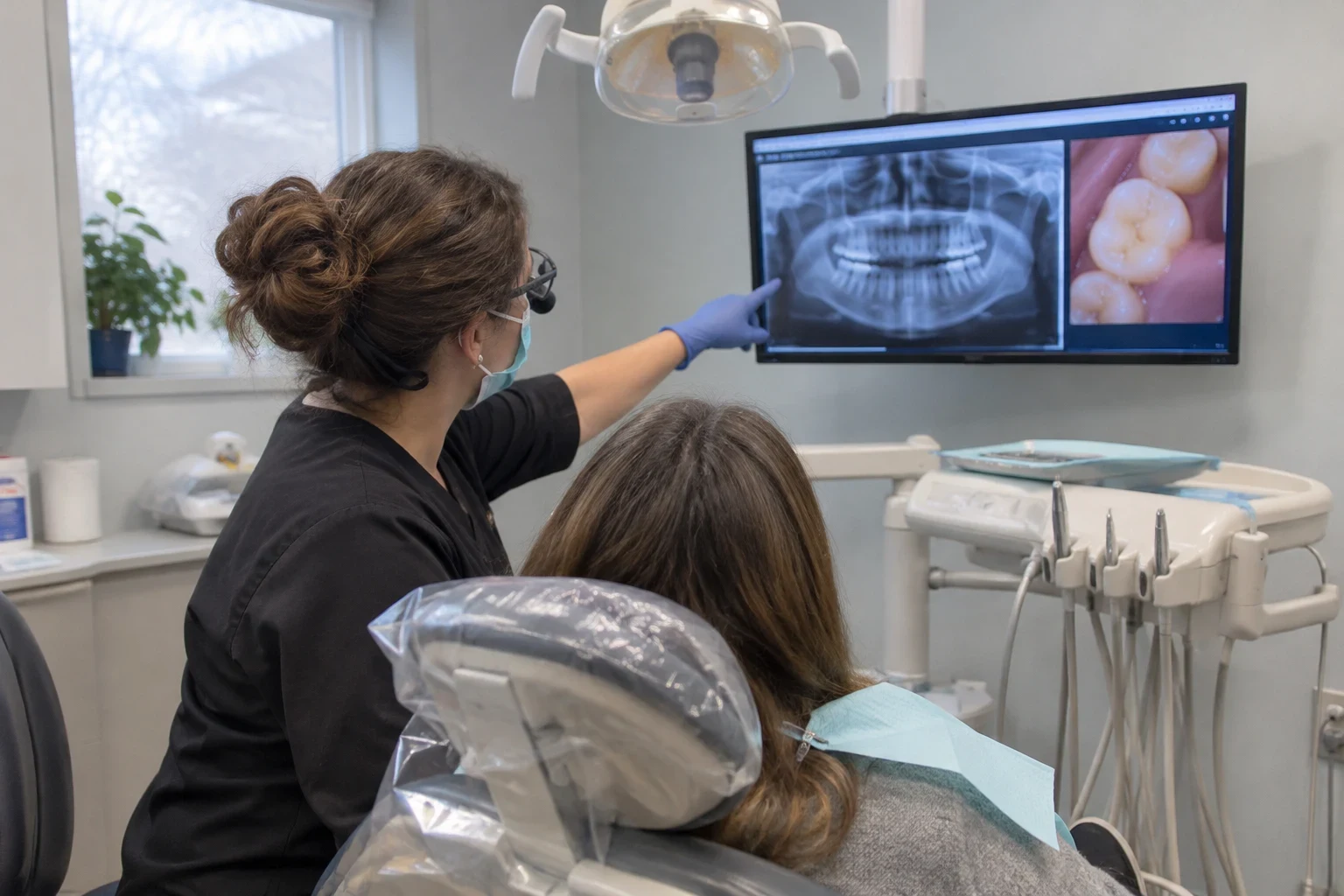
A clear look at what we found
We show you the X-ray or an intraoral photo and point to the problem. You will know which teeth need work, which can wait, and why.
- 03
Numbing done slowly
We use a topical gel first, then numb the area gradually so the injection is as comfortable as we can make it. We wait until you are fully numb before we start.
- 04
Tooth-colored composite
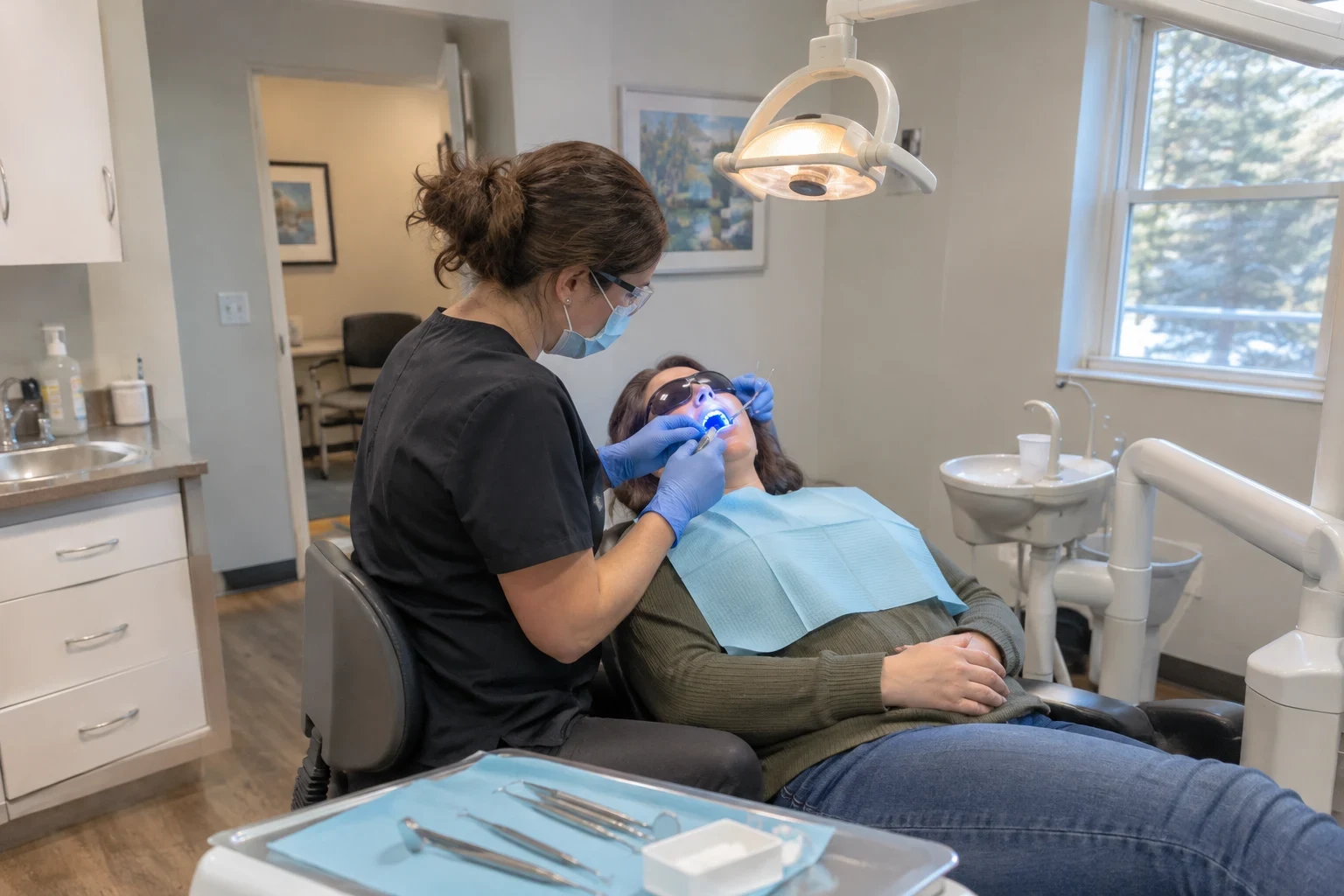
The material is shaded to match your tooth and placed in thin layers that grip the enamel, each one hardened with a curing light. It blends in on front and back teeth.
- 05
Bite check and polish
Before you leave, we check how your teeth meet and smooth any high spots. A filling that sits even slightly high can feel sore, so we take the time to get it right.
- 06
Replacing old fillings
Older metal or composite fillings can crack or leak at the edges. We replace them when there is real decay or damage underneath, not just because they are old.
Questions about Fillings?
Call(508) 652-5368Signs a tooth may need a filling
Sensitivity to sweets
A quick zing when you eat candy or sip soda often points to decay that has reached the softer layer under the enamel.
Pain when you bite
Sharp pain on chewing can mean a cavity, a cracked filling or a cracked tooth. Each needs a different fix, so this one is worth a proper look.
A dark spot or hole
A brown or gray spot, a rough edge your tongue keeps finding, or a small hole are visible signs that the enamel has broken down.
Food catching between teeth
If floss shreds or food packs into the same spot after every meal, there may be decay between the teeth or an old filling with a gap.
An old filling that feels different
A chipped, rough or darkened edge around an older filling can let bacteria slip underneath and start new decay.
How your appointment goes
- 1
Find the cause
We listen to what you are feeling, examine the tooth and take X-rays. If the problem is not decay, we tell you what it is and what will help instead.
- 2
Agree on a treatment plan
We explain which teeth need fillings and what your insurance or payment option will cover before any work begins. You decide what happens next.
- 3
Numb and clean the tooth
Once you are comfortable and numb, we remove the decayed area and keep as much healthy tooth as possible.
- 4
Fill, shape and check
We bond the composite in layers, shape it to match your bite and polish it smooth. Most single fillings take under an hour, and you can eat once the numbness wears off.
What affects the cost of a filling
The price depends on how much decay there is and where it sits in your mouth, so we quote after the exam rather than guessing over the phone. Our office accepts most dental insurance plans. If you have no insurance, our Office Dental Plan is an option, and the CareCredit Patient Payment Plan lets you spread payments over time. Either way, you will see your share before any treatment begins.
- How many surfaces are involved
- A cavity confined to one face of the tooth is a smaller repair. When decay has spread across the biting surface and down the sides, there is more to clean out and rebuild, and the fee reflects that.
- Front or back tooth
- Molars handle the heaviest chewing and are harder to reach, which can change the time and materials involved.
- Replacing an old filling
- Removing an existing filling and treating the decay beneath it adds steps compared with a first-time filling.
- Your coverage
- Insurance plans handle fillings differently. We check your benefits and walk you through your portion before we begin.
Questions about fillings
Will getting a filling hurt?
Most patients feel pressure and vibration, not pain. We numb the tooth slowly and check that it is fully numb before starting. If you feel anything, raise your hand and we stop.
How long will my mouth stay numb?
Usually two to four hours, depending on the tooth and the amount of anesthetic needed. Avoid hot drinks and chewing on that side until feeling comes back so you do not bite your cheek or tongue.
Is it normal for the tooth to feel sensitive afterward?
Mild sensitivity to cold for a few days is common, especially with deeper fillings. If it hurts when you bite down, the filling may be slightly high. Let us know, and a quick adjustment usually fixes it.
Can a cavity go away on its own?
Very early weak spots in enamel can sometimes harden again with fluoride and better brushing, and we will tell you if yours is one of those. Once decay has made a true hole, it will keep growing until it is cleaned out and filled.
Do you do fillings for children?
Yes. We fill baby teeth and adult teeth, and we take extra time to explain each step so kids know what to expect. Our Kids' Dentistry page covers how we keep young patients comfortable.
Get that tooth looked at properly
Tell us which tooth is bothering you and we will set up a visit to find out why. If it needs a filling, we can explain your options and coverage first.