ServicesInvisalign / Clear Aligners
Invisalign and Clear Aligners in Hopedale
Clear aligners can straighten crowded or gapped teeth without brackets or wires. Before we plan a single tray, we check what is really behind the problem, from how your bite meets to the health of your gums, so your treatment plan fits your mouth.
When clear aligners are the right call
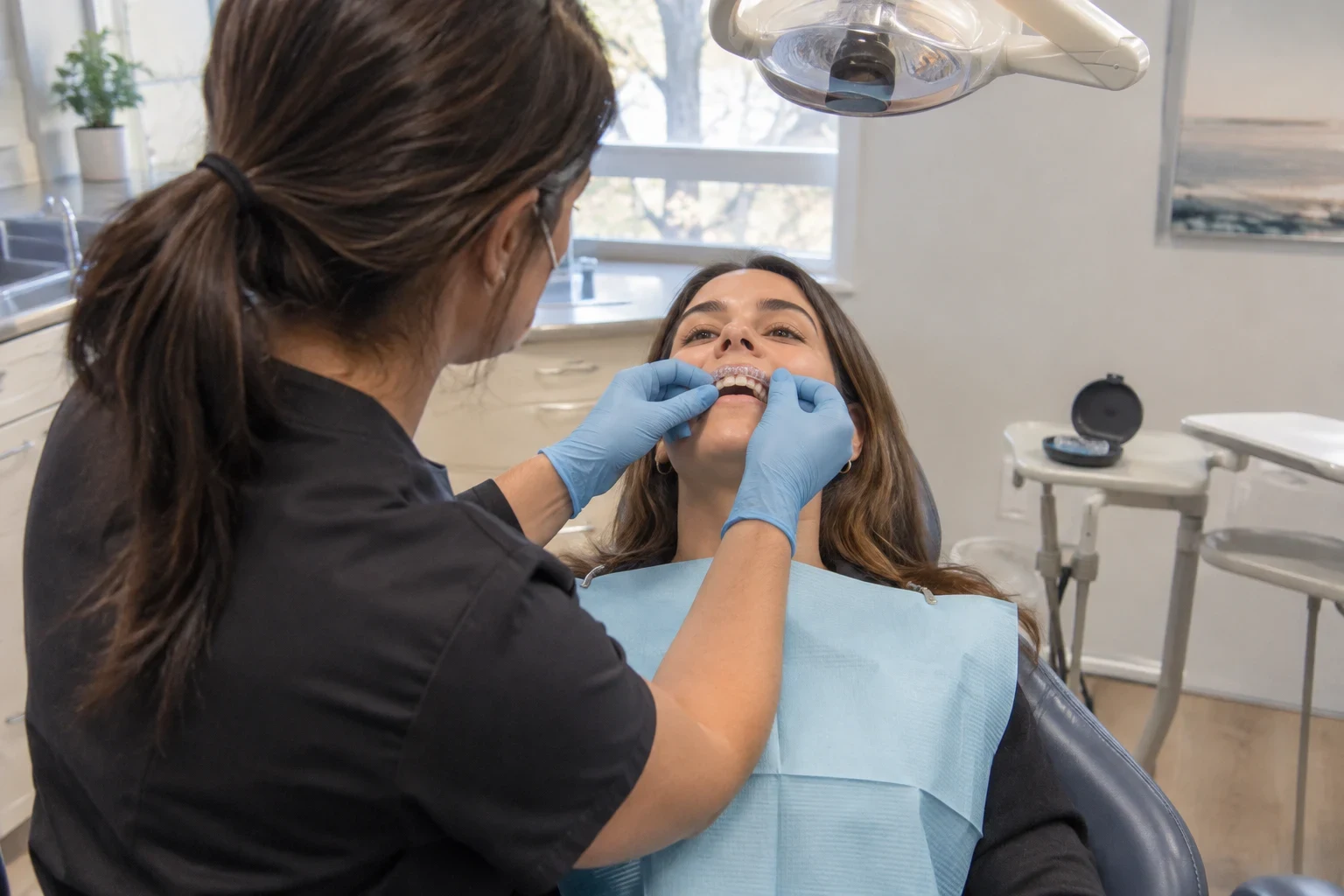
Clear aligners are a series of thin, removable plastic trays. Each set moves your teeth a small amount, and you switch to the next set on a schedule we give you. Invisalign is the best-known brand, and the idea is the same across systems: gentle, steady pressure over months instead of brackets glued to your teeth.
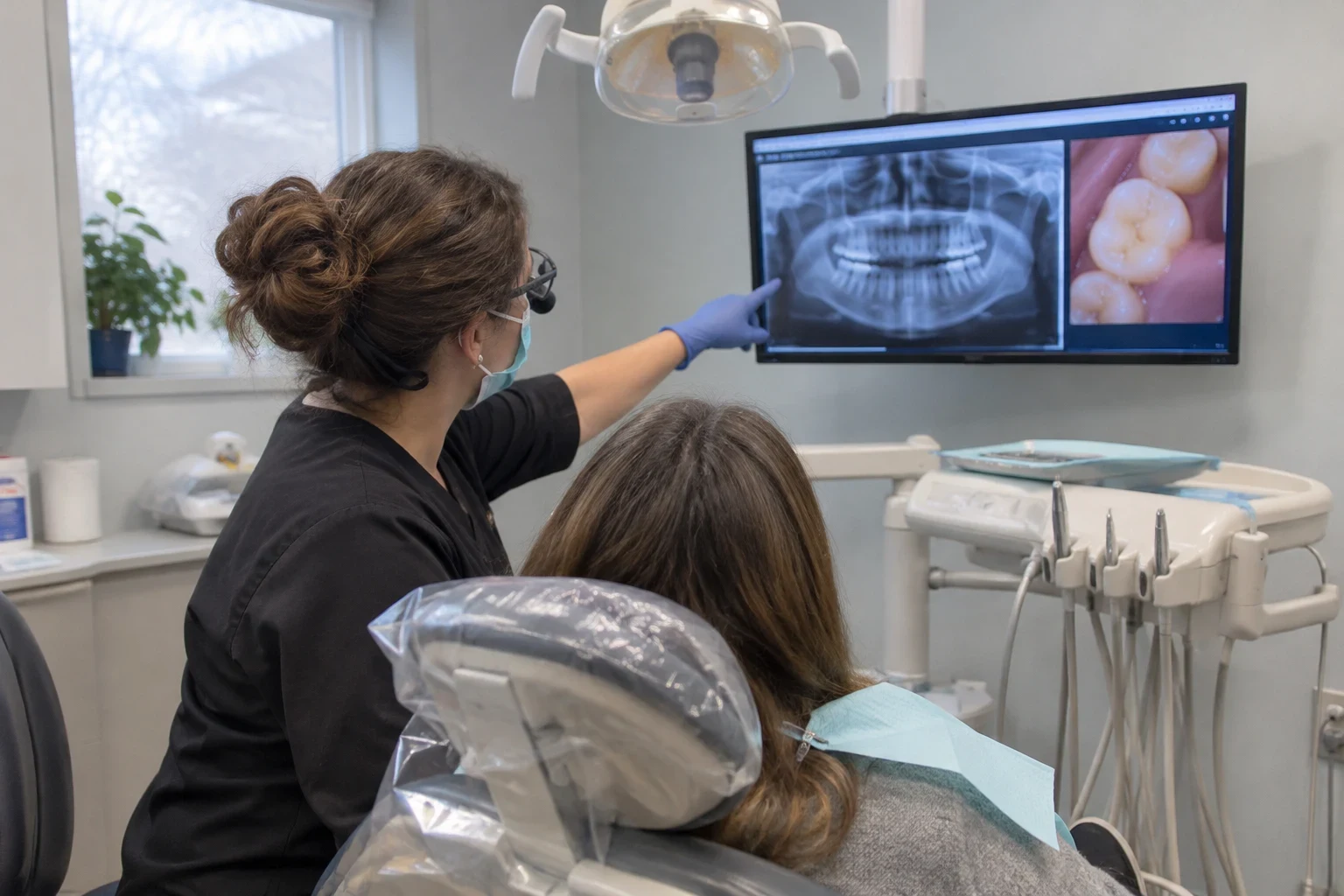
They work well for mild to moderate crowding, spacing, some overbites and crossbites, and teeth that drifted after braces years ago. They are not the answer for every smile. Crooked teeth sometimes trace back to a narrow arch, a missing tooth or a bite problem that trays alone won't fix. That is why we start with a careful exam and X-rays, and we tell you plainly if aligners are not the best route for you.
Most of our aligner patients are adults. Teens can be good candidates too, once their adult teeth are in and they are ready to wear trays every day.
What aligner treatment with us includes
- Exam, X-rays and bite check
- We look for cavities, gum inflammation, worn enamel and how your upper and lower teeth meet. Problems like these need attention before teeth start moving, so we find them first.
- Scans or impressions
- We record the exact shape of your teeth so the trays fit snugly. You see a preview of how your teeth are planned to move before you commit to anything.
- A written treatment plan
- You get the estimated number of trays, how long treatment should take, how often you'll come in and what it costs, all laid out before you start.
- Attachments and small adjustments
- Some teeth need small tooth-colored bumps attached to them so the trays can grip and turn them. A few cases also need light polishing between teeth to make room. We explain both at the planning visit, so nothing comes as a surprise.
- Check-in visits
- Every several weeks we confirm your teeth are tracking with the plan. If one tooth falls behind, we catch it early and adjust.
- A retainer when you finish
- Teeth naturally want to drift back. We fit your retainer and show you how often to wear it.
Signs clear aligners may help you
Crowded or overlapping teeth
Overlapping teeth are harder to brush and floss, so plaque collects in the tight spots. Straightening them makes daily cleaning easier and can lower your risk of cavities there.
Gaps that are getting wider
Spaces can open with age or after a tooth is lost. Gum disease can also make teeth spread, so we check the cause before we plan to close a gap.
Teeth shifted after braces
If the retainer went unworn years ago, front teeth often creep back out of line. Aligners are a common fix for this kind of relapse.
Chipping or uneven wear
When teeth meet at the wrong angle, edges can chip or wear flat. A bite check tells us whether alignment is part of the cause or whether something else, like nighttime grinding, is to blame.
You hide your smile in photos
That is reason enough to talk with us. We'll give you an honest picture of what aligners can and can't change.
What affects the cost of clear aligners
The price of aligners comes down mostly to the distance your teeth have to travel and the number of months the plan runs. After your exam, we put the full figure in writing before any trays are ordered. We accept most dental insurance plans, and we can help you check if your plan includes orthodontic coverage.
How involved your case is
A few rotated front teeth take far fewer trays than correcting a crossbite or deep overbite. More trays and more months mean a higher cost.
Care needed before you start
Fillings, gum treatment or a cleaning may need to come first. These are priced separately, and we list them so you see the whole picture.
Refinements
Sometimes a stubborn tooth needs an extra round of trays to finish. We go over how refinements are handled in your plan before you begin.
Retainers
Retainers protect your result for years, and they wear out over time. Ask us how replacements are priced.
Insurance and payment options
Orthodontic coverage varies by plan and often has a lifetime maximum. For patients without insurance, we offer an Office Dental Plan, and the CareCredit Patient Payment Plan lets you spread treatment costs over time.
How aligner treatment works, step by step
- 1
Consultation and exam
We start by listening to what bothers you about your smile. Then we examine your teeth, gums and bite and take X-rays. If a cavity or gum problem needs care first, we schedule that before anything else.
- 2
Planning the movement
We take scans or impressions and map how each tooth should move. You review the plan and the cost with us, and nothing is ordered until you agree.
- 3
Fitting day
When your trays arrive, we place any attachments, check the fit and show you how to put the trays in and take them out. Expect some pressure for a day or two with each new set; it fades quickly.
- 4
Wearing and check-ins
You wear the trays about 20 to 22 hours a day, taking them out to eat and brush. We see you every several weeks to confirm progress.
- 5
Finishing up
Once your teeth reach their planned positions, we remove the attachments, polish your teeth and fit your retainer.
Clear aligner questions we hear often
Do clear aligners hurt?
Most patients feel pressure or tightness for the first day or two with each new set. That is a sign the teeth are moving. It is usually mild, and switching trays at bedtime helps you sleep through the tightest part.
How long does treatment take?
It depends on your case. Closing a small gap can wrap up in a matter of months, while bite correction takes longer. We give you an estimate after your exam and scans, and our check-ins tell us if your teeth are keeping pace with the plan.
Can I eat and drink with the trays in?
Take them out to eat and for anything other than plain water. Coffee, tea and sugary drinks can stain the trays and hold sugar against your teeth. Brush or rinse before you put them back in.
Are aligners as effective as braces?
For many mild to moderate cases, yes. Some complex bite problems move more predictably with other approaches. If aligners aren't the best fit for you, we'll say so and explain why.
Can my teenager get clear aligners?
Often, yes, once the adult teeth have come in. The bigger question is if your teen will actually wear the trays all day, every day. We talk that through with both of you at the consultation.
Do I need a cleaning before I start?
If you're due for one, yes. Moving teeth through inflamed gums or past an untreated cavity causes problems later. Our Exams & Cleanings visit gets you ready to start on healthy footing.
Find out if aligners fit your smile
Start with an exam and a straight answer about what it will take to move your teeth where you want them. Patients come to us from Hopedale, Milford, Franklin and the surrounding towns.